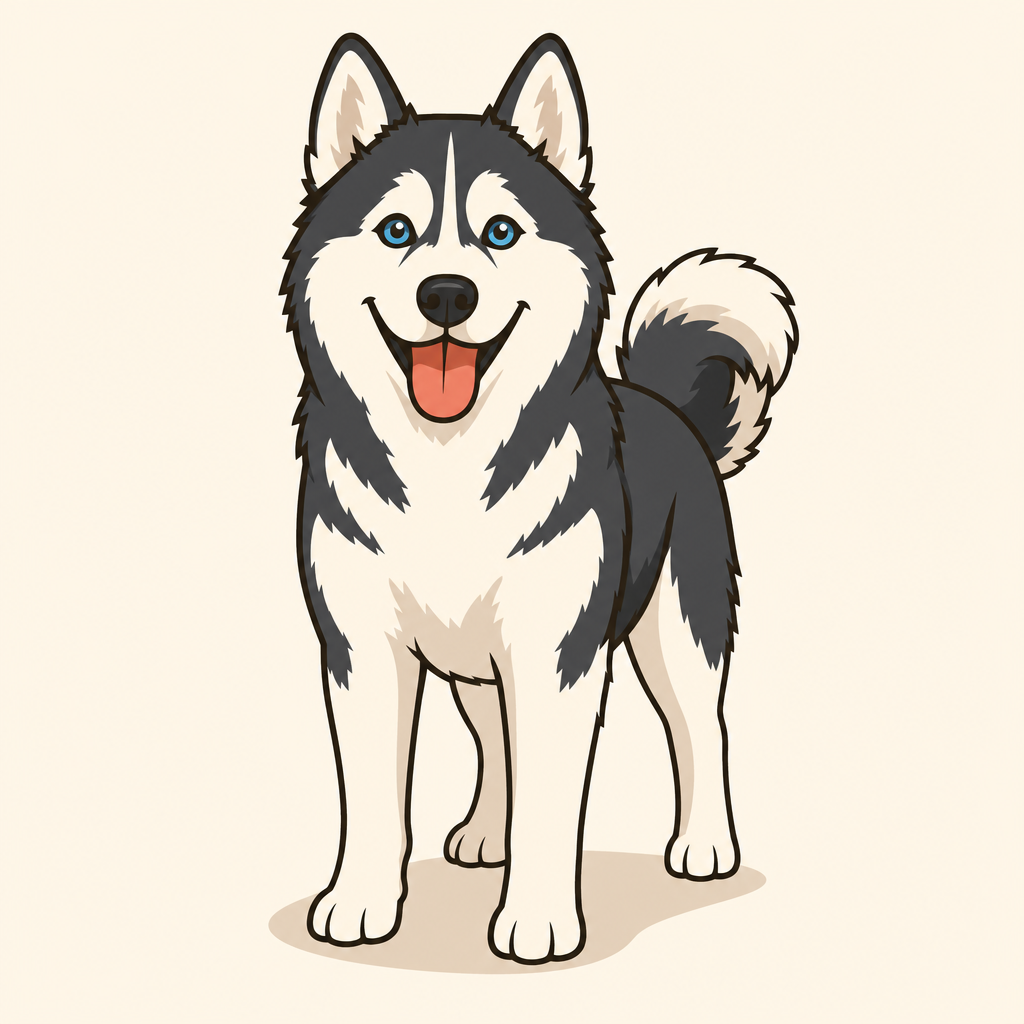
The Siberian Husky starter kit
Everything your future Siberian Husky (Husky) needs to move in, annex the couch, and immediately run the household — hand-assembled by DOGSCIENCE™ for a medium chaos unit.
The Siberian Husky is a medium-sized wolf-adjacent chaos engine designed by Russian breeders to pull sleds across frozen wastelands while maintaining an expression of pure mischief. They have the stamina of a sled team, the stubbornness of a teenager who just discovered they have legal rights, and the vocal range of a minor celebrity going through a divorce. If you want a dog that looks like they're planning something, congratulations: they are.
These dogs were built for brutal cold and extreme endurance, which means they shed like the earth is ending, they need roughly seven hours of daily exercise (or the couch cushions become casualties), and they will negotiate every command you've ever given them. They're smart enough to know they're smart, and insufferable enough to let you know they've made that calculation. Great family dogs if you have the energy, space, and emotional bandwidth for a dog that treats obedience like a TED Talk topic.
Huskies thrive in cold climates and with experienced owners who can handle their independence. If you live somewhere hot and you're hoping a husky will just chill, that's not a dog plan—that's a sad dog plan. Do not do the sad dog plan.


Keeping a Siberian Husky alive, thriving & mildly unhinged
Siberian Huskies are marathon dogs pretending to be medium-sized. They need serious, consistent exercise—we're talking 1-2 hours daily minimum of running, hiking, or pulling (actual sled work if you're blessed). Without it, they will invent hobbies like furniture deconstruction and escape artistry. Their escape artistry is not a phase: they will dig under fences, jump over them, and probably draft a strongly worded letter about why neither option works. Secure your yard like you're protecting a bank.
Their coat is a double-layer explosion that sheds catastrophically twice a year (and moderately the rest of the time). Invest in a vacuum that costs more than some cars and a lint roller you can mount on the wall. They're generally healthy, but watch for hip dysplasia and eye issues. Training requires patience and humor—they respond better to praise and consistency than correction, and they will call your bluff.
- Exercise non-negotiable: 1-2 hours daily of intense activity (running, pulling, serious hiking). A bored husky is a renovating husky.
- Fence security: They're escape artists. Dig-proof barriers, 6+ foot height, buried fencing—they've thought of your plan and improved it.
- Coat management: Brush 2-3 times weekly year-round; during shedding season (spring/fall), you'll be vacuuming every other day. Accept this now.
- Training approach: Positive reinforcement only. They're smart enough to negotiate and stubborn enough to quit if you're harsh. Consistency beats dominance.
- Heat sensitivity: Their coat is built for cold. In warm climates, they overheat, stress shed, and suffer. This is not a dog for year-round 90°F living.
- Prey drive: They were bred to hunt. Small animals (cats, rabbits, your neighbor's guinea pig) are not safe unless raised with them from puppyhood.
Siberian Husky questions you're definitely Googling at 2am
Do Huskies actually need to live somewhere cold?
Yes, actually. They can survive in warm places, but they're not happy about it and neither are you. Their double coat is designed for insulation in brutal cold; in hot climates they'll shed constantly, overheat easily, and be generally miserable. If you live somewhere warm and want a husky, you're creating a sad dog and a vacuuming nightmare. Get a different breed. We mean it.
Will my Husky come when I call them?
Sometimes! Huskies respond beautifully to recall training when there's nothing more interesting happening. A squirrel, another dog, or literally the wind blowing the wrong direction will make them suddenly develop selective hearing. This isn't stubborn disobedience—it's hardwired prey drive and independence. A strong recall takes months of work and never off-leash freedom in unfenced spaces. They need reliable fencing and controlled training environments.
Are Huskies good with kids?
They're great with active families who have older kids (8+). They're high-energy, playful, and pack-oriented. But they're also heavy, strong, and have zero chill, so they can accidentally knock over toddlers. They also have a prey drive that makes them not trustworthy around very small kids or other small pets unless raised with them. Do the math: energetic dog + tiny human = potential problems. Best with older, more coordinated kids in active families.
How much do they shed?
Enough that people build shrines to their vacuum cleaners. Huskies shed year-round and blow their entire coat twice yearly. We're talking tumbleweeds of fur rolling across hardwood floors, a husky-fur ecosystem developing under furniture, and the ability to knit a second dog from what you vacuum in a week. If you're house-proud, this is not your dog. If you're house-realistic, buy premium brushes and accept your new life as a fur custodian.
