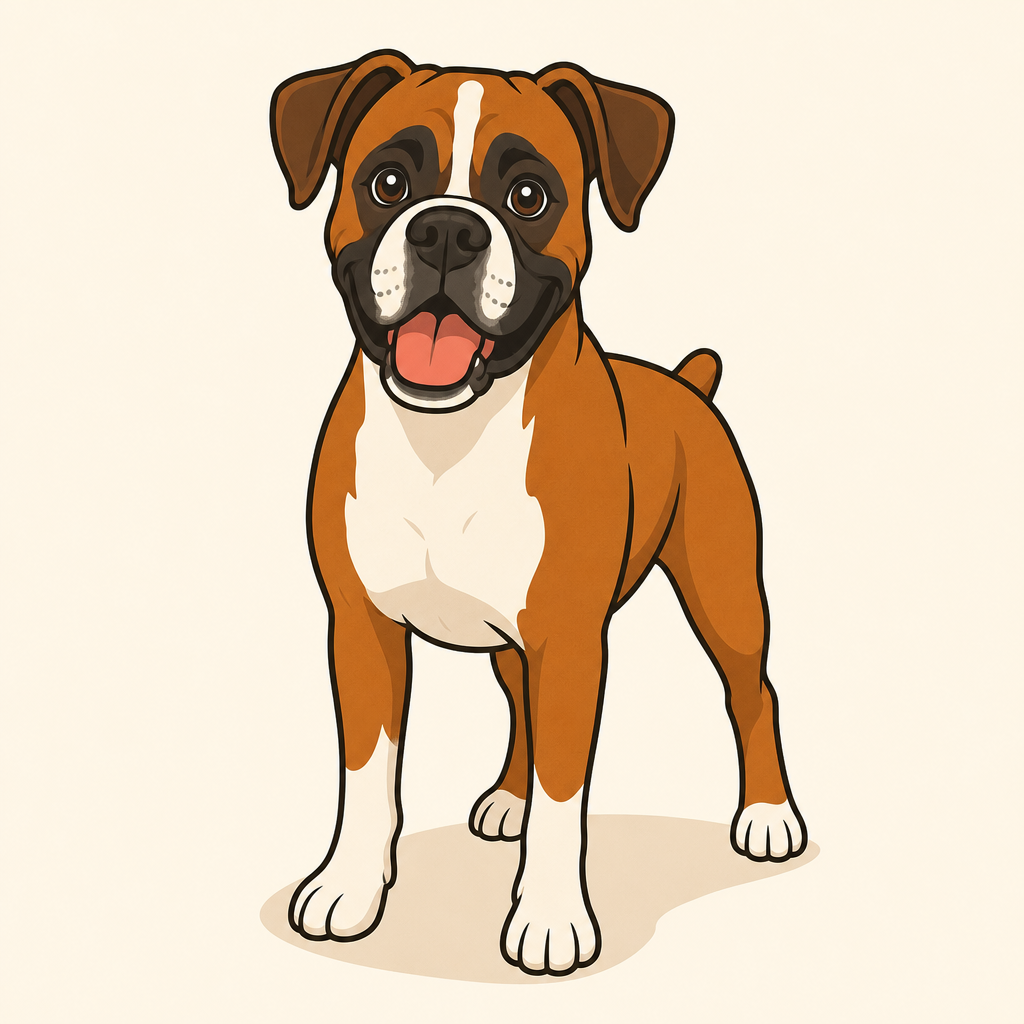
The Boxer starter kit
Everything your future Boxer needs to move in, annex the couch, and immediately run the household — hand-assembled by DOGSCIENCE™ for a large chaos unit.
Boxers are the golden retrievers of the chaos world — hyperintelligent, absurdly affectionate, and convinced that they are lap dogs despite weighing 70 pounds and having the structural integrity of a wrecking ball. They will follow you from room to room, sit on your feet, headbutt your face when excited, and somehow believe this is what you wanted. They're not wrong.
These are busy dogs who need jobs, space to move, and humans who won't crumble when a Boxer's tail takes out your grandmother's vase at full wag velocity. They're endlessly playful, loyal to an almost embarrassing degree, and will defend your house with the intensity of someone who genuinely believes the mailman is a direct threat to democracy. If you want a dog that thinks you're the most interesting thing on Earth and isn't afraid to tell you via interpretive jumping, a Boxer is your person's person.
Not for: apartment dwellers who value furniture, people who don't want a 60-pound shadow, or anyone expecting an independent mind. Very much for: active households, families who can handle enthusiastic chaos, and people who think dog farts are endearing (you will need to think this).


Keeping a Boxer alive, thriving & mildly unhinged
Boxers are built like tiny rhinos — compact, muscular, and prone to specific health landmines. They need real exercise (45–60 minutes daily minimum), consistent training (they're smart enough to test you), and a human who understands that boredom turns them into couch-destroying philosophers. They also have a face that sheds its weight in fur twice a year, a jaw structure that makes them prone to certain cancers, and a tendency to overheat because their noses are basically vestigial.
- Exercise is non-negotiable: Two short walks won't cut it. These dogs need running, play sessions, or training work daily. Bored Boxers become destructive Boxers become your problem.
- Heat management: That flat face is a heat-trapping machine. No hot weather running, no leaving them in cars, no outdoor activity in peak heat. They'll overheat before you notice.
- Bloat watch: Boxers are prone to gastric dilatation-volvulus (GDV). Feed smaller meals, avoid exercise immediately after eating, and know the emergency vet's number by heart.
- Training from puppyhood: Smart + strong + enthusiastic = a dog that needs boundaries. Positive reinforcement works. Letting them slide on jumping or mouthing does not.
- Coat maintenance: Short but dense. Brush weekly during shedding season (twice yearly). Accept that dog hair is now part of your diet.
- Vet checkups twice yearly: Boxers live 10–12 years on average and are prone to heart issues, tumors, and hip dysplasia. Catch things early.
Boxer questions you're definitely Googling at 2am
Do Boxers actually need another dog?
Boxers are pack animals and genuinely thrive with a buddy, especially if they're younger or high-energy. Another dog gives them an outlet for their relentless play drive and keeps boredom at bay. That said, they're also perfectly fine solo if YOU provide enough exercise and attention. A second dog is a convenience for them, not a requirement — but scientifically, the chaos is better shared.
Are Boxers good with kids?
Yes, if supervised. Boxers are patient, affectionate, and durable enough to handle kid chaos. The catch: their enthusiasm can accidentally knock over small humans. Teach kids how to interact calmly (no face-level hugging) and train the dog to not jump. A Boxer raised with kids is a kid's best friend. A Boxer raised without kids needs a solid introduction and clear boundaries.
Why does my Boxer keep trying to sit on my lap?
Because they think they're still a 10-pound puppy and you're their favorite piece of furniture. This is a Boxer thing — they're emotionally dependent and physically oblivious about size. It's simultaneously annoying and the sweetest thing ever. Don't discourage it unless you have a spine made of titanium. For the rest of us, just accept that your lap is now permanently reserved.
How do I stop the jumping?
Ignore it completely (turn away, no eye contact), then reward calm behavior with attention. Teach sit as a replacement behavior for jumping. Consistency is everything — if one person allows it and another doesn't, your Boxer will be genuinely confused and will jump anyway. Make jumping boring and sitting rewarding, and after weeks of repetition, they'll learn. Boxers are smart but also think you're a toy, so patience and structure matter.
