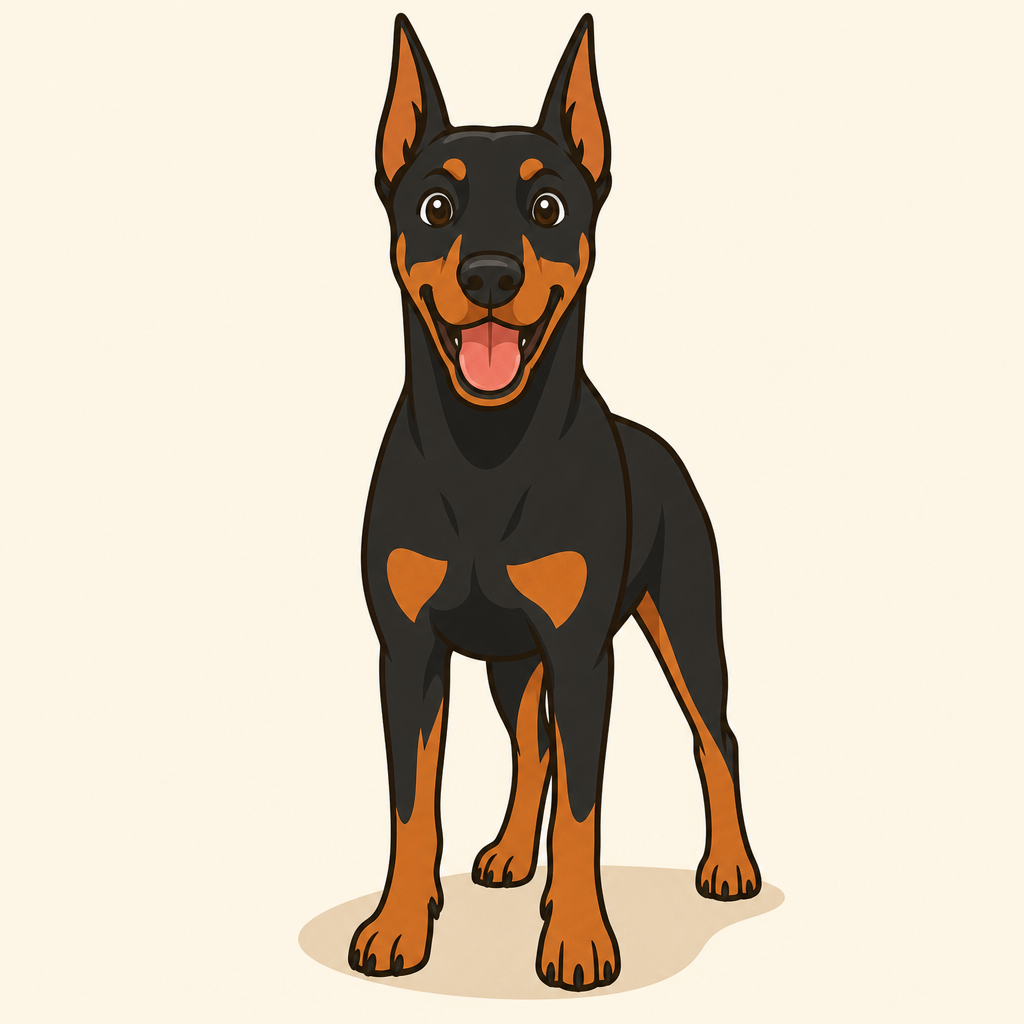
The Doberman Pinscher starter kit
Everything your future Doberman Pinscher (Doberman) needs to move in, annex the couch, and immediately run the household — hand-assembled by DOGSCIENCE™ for a large chaos unit.
The Doberman Pinscher is what happens when you cross pure athleticism with velcro dog syndrome and a disturbingly human sense of humor. These are 70-pound land missiles with ears that could pick up radio signals, bred originally to be the perfect personal protection dog — which means they're smart enough to know when you're sad, anxious, or just thinking about leaving the room without them. They will follow you to the bathroom. They will follow you to the bathroom.
Dobermans are intensely loyal, surprisingly sensitive, and absolutely convinced they are lap dogs. They're also prone to sudden zoomies at 3 AM and have a prey drive that makes squirrels deeply uncomfortable. If you want a dog that's simultaneously a couch cuddle-puddle AND a sprinting assassin, congratulations, you've found it. Just know: this breed needs a job, a ton of exercise, and a human who's actually present. They don't do well with long lonely days, and they will exact psychological revenge via your shoes.
Real talk: Dobermans are absolutely NOT for casual dog owners. They're for people who actually want a relationship with an animal, not just a pet that happens to live in your house.


Keeping a Doberman Pinscher alive, thriving & mildly unhinged
Dobermans are working dogs masquerading as couch potatoes, so your job is keeping them mentally and physically stimulated before they invent their own hobbies (none of which you'll like). They're also prone to a few breed-specific health landmines and require proactive care.
- Exercise is non-negotiable: At least 1.5-2 hours daily of serious activity — running, training, agility work, or structured play. Bored Dobermans develop anxiety, destructiveness, and an interest in interior design (they'll redecorate your drywall). A tired Doberman is a well-behaved Doberman.
- Short, slick coat = easy grooming, but watch for dilated cardiomyopathy (DCM): Brush weekly, trim nails regularly. More importantly: work with a breeder who health-tests parents for heart issues, and get cardiac screening (echocardiograms) done annually once they hit 4+ years old. This breed can have silent heart problems.
- Training and socialization start NOW: These dogs are smart enough to outsmart you if you let them. Positive reinforcement, consistency, and ideally a trainer who understands their sensitive temperament. Dobermans respond poorly to harsh corrections — they shut down or become unpredictable.
- vonWillebrand's disease is real: Before any surgery or dental work, ask your vet about screening for this blood clotting disorder. It's common in the breed and can cause excessive bleeding.
- Ear cropping is optional: If you want natural floppy ears, great — they're adorable. Just know the breed standard calls for cropped ears, and uncropped dogs might get unfair judges at shows. Either way, check ears weekly for moisture and infection.
- They get cold: Unlike some large breeds, Dobermans have minimal body fat and thin coats. Winter walks need jackets, and they should NOT live outside. They're indoor dogs who need to be near their humans.
Doberman Pinscher questions you're definitely Googling at 2am
Do Dobermans really need their ears cropped?
Nope. The breed standard (for showing) calls for cropped ears, but if you're not competing, natural ears are totally fine — and honestly, adorable. Cropping is a cosmetic surgery, not a health requirement. If you DO choose to crop, it's done at 7-12 weeks old and requires aftercare. If you don't, no problem at all. Just brush the insides regularly since floppy ears trap moisture.
Are Dobermans aggressive or dangerous?
They have a prey drive and were literally bred as protection dogs, so yeah — they're capable of being protective and they WILL chase small animals. But aggression toward humans? That's a training, socialization, and genetics issue, not a breed issue. A well-socialized Doberman is friendly, goofy, and weirdly sweet. A neglected one? That's dangerous. The breed's reputation comes from irresponsible owners and Hollywood, not the dogs themselves. That said: they're not for first-time dog owners.
Can a Doberman live in an apartment?
Technically yes, but it sucks for everyone involved. They NEED space to move and a yard to burn energy. An apartment with a sedentary owner is basically a recipe for an anxious, destructive dog with behavioral problems. If you're in an apartment AND can commit to serious daily exercise (1.5-2+ hours) PLUS mental stimulation, it's possible. But a house with a yard and an active owner? That's the dream scenario for this breed.
How long do Dobermans live?
Average lifespan is 10-13 years, sometimes longer. Heart disease (DCM) is the leading cause of death in the breed, which is why preventative screening matters. Hip dysplasia, cancer, and thyroid issues also show up. Work with health-tested breeders, keep your dog at a healthy weight, and get annual vet checkups. This breed deserves to stick around.
