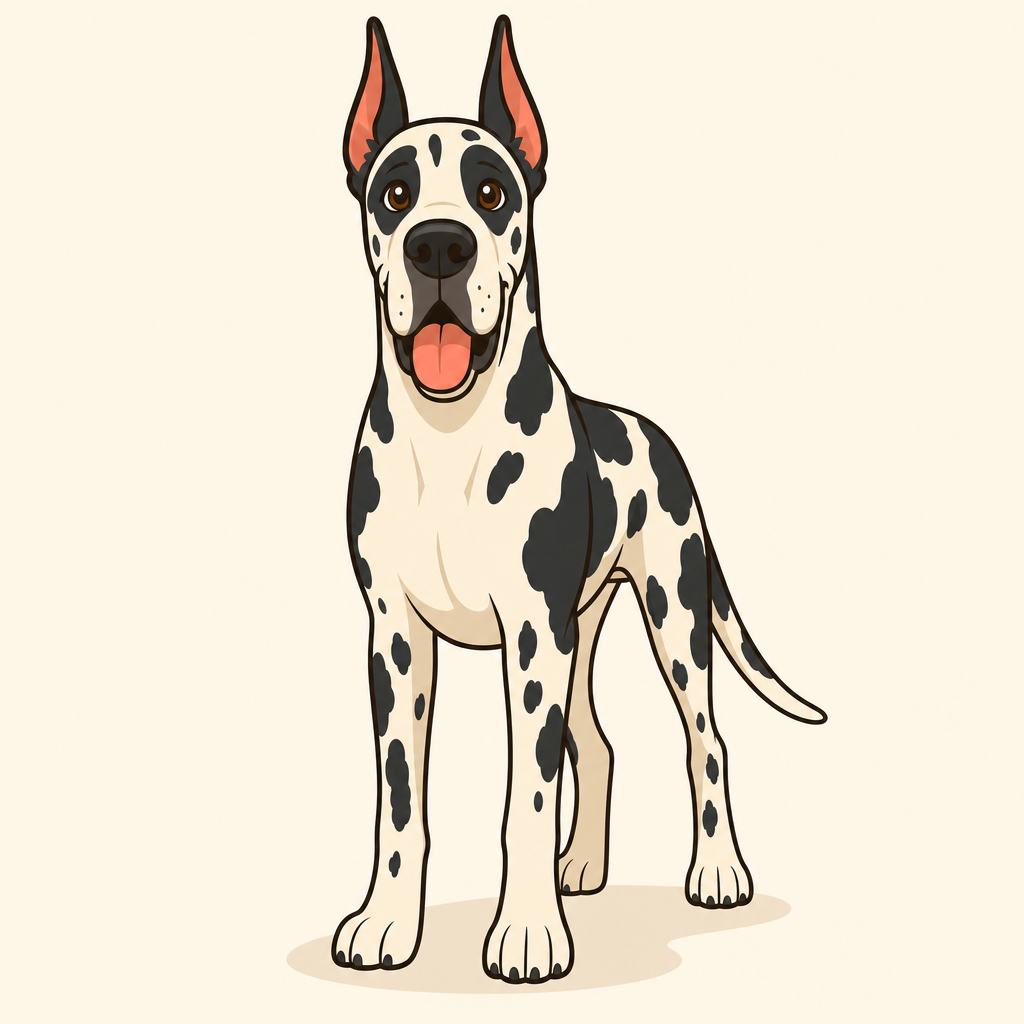
The Great Dane starter kit
Everything your future Great Dane needs to move in, annex the couch, and immediately run the household — hand-assembled by DOGSCIENCE™ for a giant chaos unit.
The Great Dane is a horse with separation anxiety and a crushing need to sit on your lap. These gentle giants were bred to hunt wild boar, which is wild because they look like they'd get winded walking to the fridge. Don't let the size fool you—a Dane's entire personality is soft. They want to be near you. Always. They will follow you to the bathroom and stare while you pee. This is love.
Energy-wise: moderate. They're not couch potatoes, but they're not gonna demand six miles before breakfast either. They need regular walks, play, and crucially, early socialization because a 150-pound dog that jumps needs to know that jumping is bad, actually. They're sensitive, people-pleasers who hate being alone, and they have the shortest lifespan of any breed (7-10 years), which is the one cruel joke the dog gods play.
Get a Dane if you want a gentle, loyal shadow. Don't get one if you can't handle dog hair in your food, vet bills for a giant, or the existential dread of their relative brevity.


Keeping a Great Dane alive, thriving & mildly unhinged
Great Danes are high-maintenance in ways people don't expect. Yes, they're big—yes, they eat a lot—but the real work is joint health, early training, and understanding they're prone to bloat, which can kill them fast. Also: they generate heat like a furnace and shed like the seasons are changing inside your house.
- Bloat prevention is non-negotiable: Feed two small meals daily (not one big one), don't let them drink huge amounts at once, avoid exercise right before/after eating. Bloat is a medical emergency and kills Danes. Know the signs (restlessness, distended belly, retching) and have an emergency vet plan.
- Joint support from day one: Giant breeds grow too fast. Use large-breed puppy formula (slower growth = fewer joint problems), keep jumping to a minimum until 18+ months, and don't overexercise puppies. Hip dysplasia is real here.
- Socialize early and obsessively: A well-mannered 150-pound dog is a joy. An unsocialized one is a lawsuit. Get them around people, dogs, and new environments before 16 weeks.
- Keep them cool: Giant breeds overheat easily. No exercise in heat, always fresh water, shade mandatory. They'll pant dramatically and act like they're dying even when they're fine, but take it seriously.
- Brush regularly (multiple times weekly): Their short coat sheds constantly. Accept it. Use a rubber curry brush. It helps.
- Monitor for dilated cardiomyopathy (DCM): Danes are prone to heart issues. Regular vet checkups, be alert to lethargy or labored breathing, and don't panic about every cough—but report it.
Great Dane questions you're definitely Googling at 2am
Do Great Danes actually need a lot of exercise?
No, and this surprises people. They're bred for bursts of speed (boar hunting), not endurance. A Dane needs 30-60 minutes of daily walking/play—not marathons. They're actually suited to apartments if they get regular walks and aren't alone all day. The real energy drain is mental stimulation and companionship. A bored Dane is a destructive Dane.
Why do they only live 7-10 years?
Giant breeds age faster than small dogs—their cells divide more, which accelerates aging. It sucks. There's no secret to extending their lifespan significantly, but keeping them at a healthy weight, avoiding overexertion as puppies/young adults, managing bloat risk, and staying on top of vet care buys you time. Quality over quantity, basically.
Will my Great Dane actually be a good family dog?
Yes, genuinely. They're patient, gentle, and affectionate with kids. They're not aggressive. The catch: they're big enough to knock over a toddler accidentally, and they need supervision like any large dog around small children. They're also sensitive—yelling at a Dane will destroy them emotionally for hours. If you want a dog that makes everyone in the room smile and will let your kids use them as a pillow, a well-raised Dane is perfect.
How much does a Great Dane cost to own?
More than a medium dog, easily. Food ($50-100/month depending on diet), vet care (giant breeds = higher bills), and inevitable orthopedic issues add up. Budget for emergency bloat surgery (can be $3K+). They're not poor-person dogs, and that's honest. If you're on a tight budget, a Dane might strain you.
