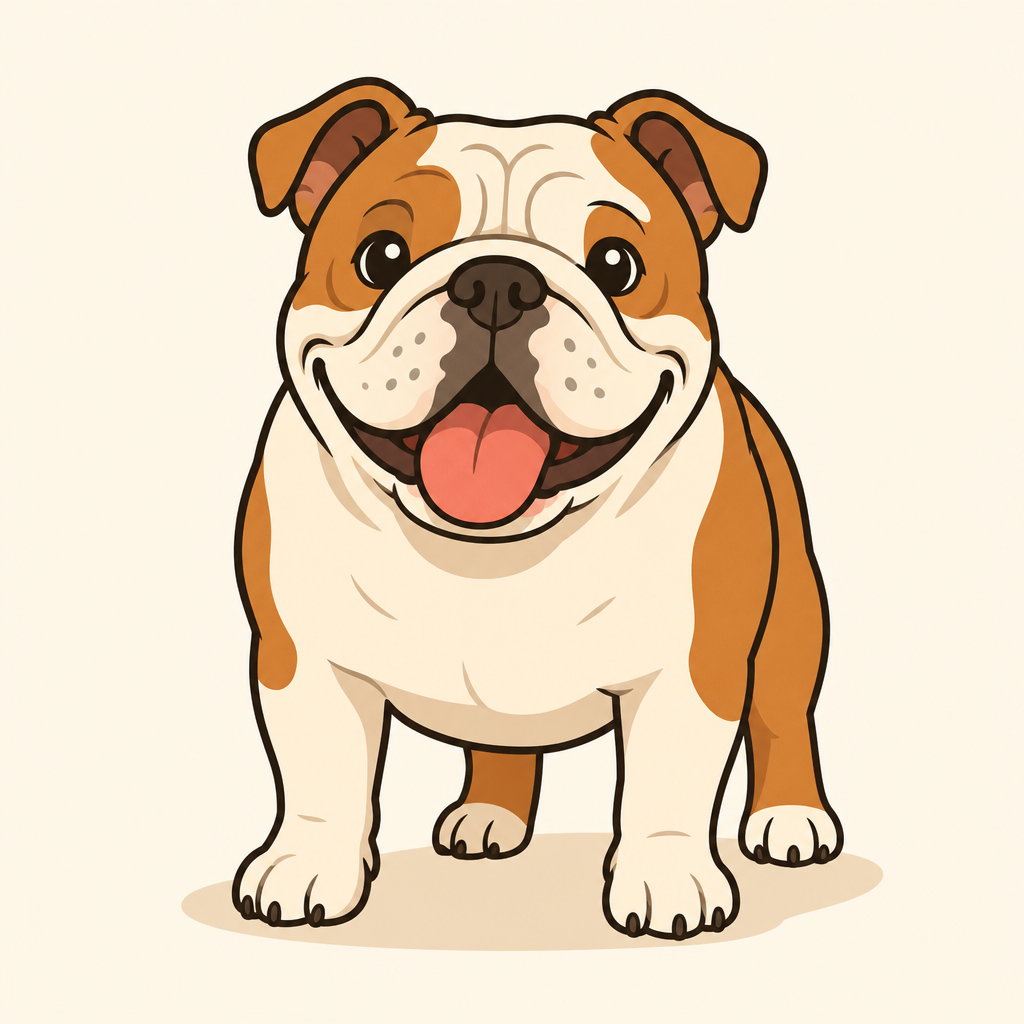
The Bulldog starter kit
Everything your future Bulldog (English Bulldog) needs to move in, annex the couch, and immediately run the household — hand-assembled by DOGSCIENCE™ for a medium chaos unit.
The Bulldog is a medium-sized brick of pure wrinkled determination that moves through the world like it's negotiating peace treaties with gravity. They were literally bred to wrestle bulls (yes, really), so they came pre-loaded with a stubborn streak that makes them perfect for people who enjoy negotiations with their furniture. They're slow, they're loud (snoring, snorting, wheezing—the full respiratory symphony), and they will absolutely steal your seat and look betrayed when you ask for it back.
But here's the thing: Bulldogs are deeply, irrationally affectionate. They don't want to dominate you; they want to sit on you. They're the couch potato of the dog world, happy to spend 20 hours a day farting near your feet and occasionally licking your elbow for no reason. They're genuinely not for people who want a hiking buddy or a dog that respects personal boundaries, but if you want a loyal, funny, low-energy companion who looks like they're perpetually disappointed by life's nonsense, congratulations—you've found your breed.


Keeping a Bulldog alive, thriving & mildly unhinged
Bulldogs have special needs that aren't optional—they're basically small dogs with the structural decisions of a linebacker, which is both hilarious and requires actual attention. Their flat faces mean they overheat like a laptop running seventeen streaming services, their wrinkles need cleaning (yes, between the wrinkles), and their joints wear out faster than they'd like. This is a breed that needs a committed owner, not just someone charmed by the mug shots.
- Climate control is non-negotiable: Keep them in cool environments. No hot car runs, no summer romps at 2 PM, no pretending they'll be fine in heat. They physically cannot cool themselves properly. Air conditioning isn't a luxury; it's life support.
- Facial wrinkle maintenance is real: Clean between those wrinkles regularly (weekly minimum) with a soft cloth—moisture and bacteria love living in there, and skin infections are the opposite of fun for everyone.
- Moderate, controlled exercise only: They need daily walks (30-40 minutes split into smaller chunks), but sprinting and intense activity can cause respiratory or joint issues. They're built for short bursts of chaos, not endurance events.
- Monitor their breathing and snoring: Some snoring is normal breed nonsense, but excessive gasping, lethargy, or difficulty breathing after minimal activity means vet visit now. Brachycephalic airway syndrome is real and sometimes fixable with surgery.
- Joint and weight management: They gain weight like it's an Olympic sport. Keep them lean-ish (you should feel their ribs without pressing) because extra weight tanks their joints and breathing. Feed measured portions, skip the table scraps.
- Vet visits should happen more often: Annual checkups aren't enough for Bulldogs. Aim for twice-yearly appointments. Genetic health quirks (hip dysplasia, cherry eye, skin issues) catch earlier with proactive monitoring.
Bulldog questions you're definitely Googling at 2am
Do Bulldogs really need surgery to breathe?
Not all of them, but many should have it. A lot of Bulldogs live their whole lives huffing and puffing, and that's... it's just how they are. But if your Bulldog is genuinely struggling (constant open-mouth breathing, sleeping poorly, can't exercise without distress), talk to your vet about soft palate surgery, nostril widening, or laryngeal procedures. It's not cosmetic; it genuinely improves their quality of life and longevity.
Can Bulldogs actually swim?
Most Bulldogs are catastrophically bad swimmers. Their heads are disproportionately large, their legs are short, and their bodies are dense like a meat submarine. Some take to water fine, but many will panic immediately. Never assume your Bulldog can swim. If you have a pool, use a life jacket. If you want a water-loving companion, this is not your breed.
How long do Bulldogs actually live?
8-10 years on average, sometimes into their early teens with excellent care. It's shorter than most dogs, which is heartbreaking and a big reason to go in eyes-open about health costs and the commitment. They're also prone to sudden health crises, so insurance or a solid emergency fund is genuinely smart.
Are Bulldogs aggressive or mean?
Not inherently, no. Modern Bulldogs are actually pretty chill with people and other dogs—they were selectively bred away from that whole bull-fighting aggression thing. They can be stubborn and territorial about toys or food (they're still driven by that hunting/resource-guarding instinct), but they're not dangerous. Just don't steal their bed without negotiating first.
