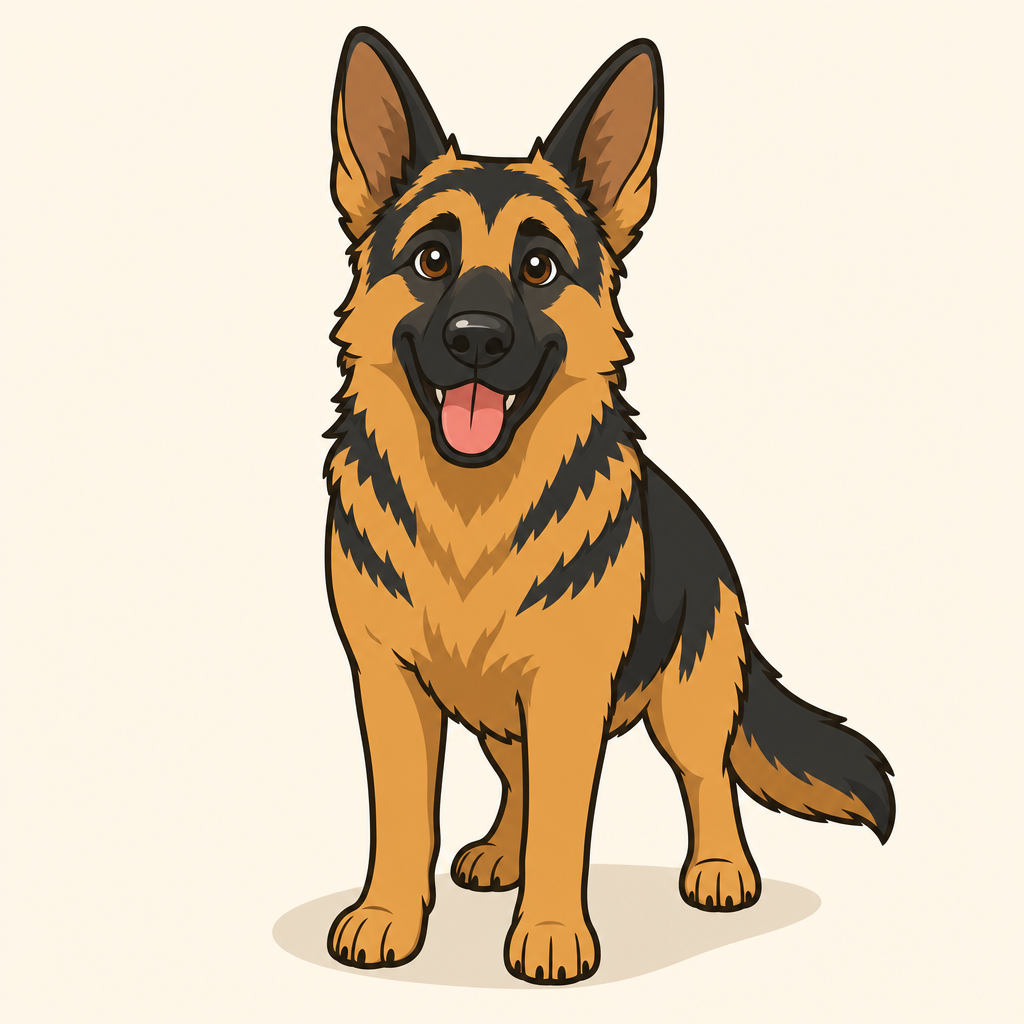
The German Shepherd starter kit
Everything your future German Shepherd (GSD) needs to move in, annex the couch, and immediately run the household — hand-assembled by DOGSCIENCE™ for a large chaos unit.
The German Shepherd is a 55-90 lb walking power fantasy with the work ethic of a CEO who also goes to the gym at 5 AM. This is a dog that will absolutely have opinions about your life choices, will want to be involved in everything you do, and will develop a masterclass in side-eye if you leave them alone for more than four hours. They're smart enough to open doors, loyal enough to die for you, and dramatic enough to convince you they're dying if you forget their afternoon snack.
Bred to herd sheep and work alongside German police, these dogs are purpose-built — which means a bored GSD is basically a 90-pound toddler with the ability to destroy drywall and learn how to unlock things. They need a job, they need training, they need exercise that makes them actually tired (not just walked around the block tired). They're not for apartment living unless you're genuinely committed to daily structured activities. They're for people who want a dog that's equal parts protector, therapist, and velcro-coated shadow.
Still interested? Cool. You're about to have the most loyal, intelligent, and slightly neurotic best friend you've ever met.


Keeping a German Shepherd alive, thriving & mildly unhinged
German Shepherds are high-octane dogs that need both mental and physical exercise, not one or the other — think 1-2 hours daily of real activity (fetch, running, training, problem-solving). Their double coat sheds like a seasonal weather event, so invest in a good vacuum and accept that tumbleweeds of fur will become your home décor. Hip dysplasia and degenerative myelopathy are real breed concerns, so responsible breeding matters, and keep their weight optimized to protect those joints.
- Exercise is non-negotiable: 60-90 minutes daily minimum of actual work (running, fetch, training) — a lazy walk won't cut it and they'll invent their own entertainment (which may include redecorating your house).
- Coat maintenance: Brush 2-3 times per week, more during shedding seasons (spring and fall) when they shed enough hair to knit a second dog.
- Training and mental stimulation: These dogs need jobs and structure. Obedience training, agility, nosework, or even casual trick training keeps their brain busy and prevents destructive boredom.
- Socialization early: GSDs have strong protection instincts; early, consistent exposure to people, dogs, and environments prevents reactive or overly suspicious behavior.
- Watch their joints: Avoid high-impact jumping and intense exercise before age 18 months (growing bones), maintain healthy weight, and consider vet-recommended joint support as they age.
- Regular vet checkups: Hip and elbow evaluations, screening for DM (degenerative myelopathy), and preventive care matter more with this breed than many others.
German Shepherd questions you're definitely Googling at 2am
Do German Shepherds really need that much exercise?
Yes. Non-negotiably yes. This breed was literally engineered to work 8-hour shifts herding sheep across German countryside. A 20-minute walk will leave them bored enough to eat your baseboards or stress-pace constantly. You need 1-2 hours of real activity — fetch, running, training, agility — not just outdoor time. If you work 9-5 with no dog walker/daycare, this breed might genuinely hate you by 3 PM.
Will my German Shepherd protect my home without training them to?
Probably yes, but not in the way you want. Untrained protective instinct = reactive, unpredictable, potentially dangerous behavior. A trained GSD who knows impulse control, can distinguish between normal and actual threats, and responds to your commands is safe and effective. An untrained one is a liability. Train your dog. Please.
How bad is the shedding actually?
Imagine if your dog had a season where they just release their entire undercoat twice a year. During these periods (usually spring and fall), you will find hair in your food, your bed, your car, places hair should not physically exist. Regular brushing reduces this to merely very bad instead of apocalyptic. If you have mild allergies, this might not be your breed. If you have a white couch, reconsider your life.
Are German Shepherds good with other dogs?
It depends. They're not naturally dog-aggressive, but they're confident and have strong body language — other dogs sometimes find this intimidating. Early socialization with dogs of all sizes is crucial. They can live peacefully with other dogs, but they'll probably want to be in charge (gently managing things, positioning themselves as the household executive). Introduce them young and supervise until you're certain everyone's cool.
