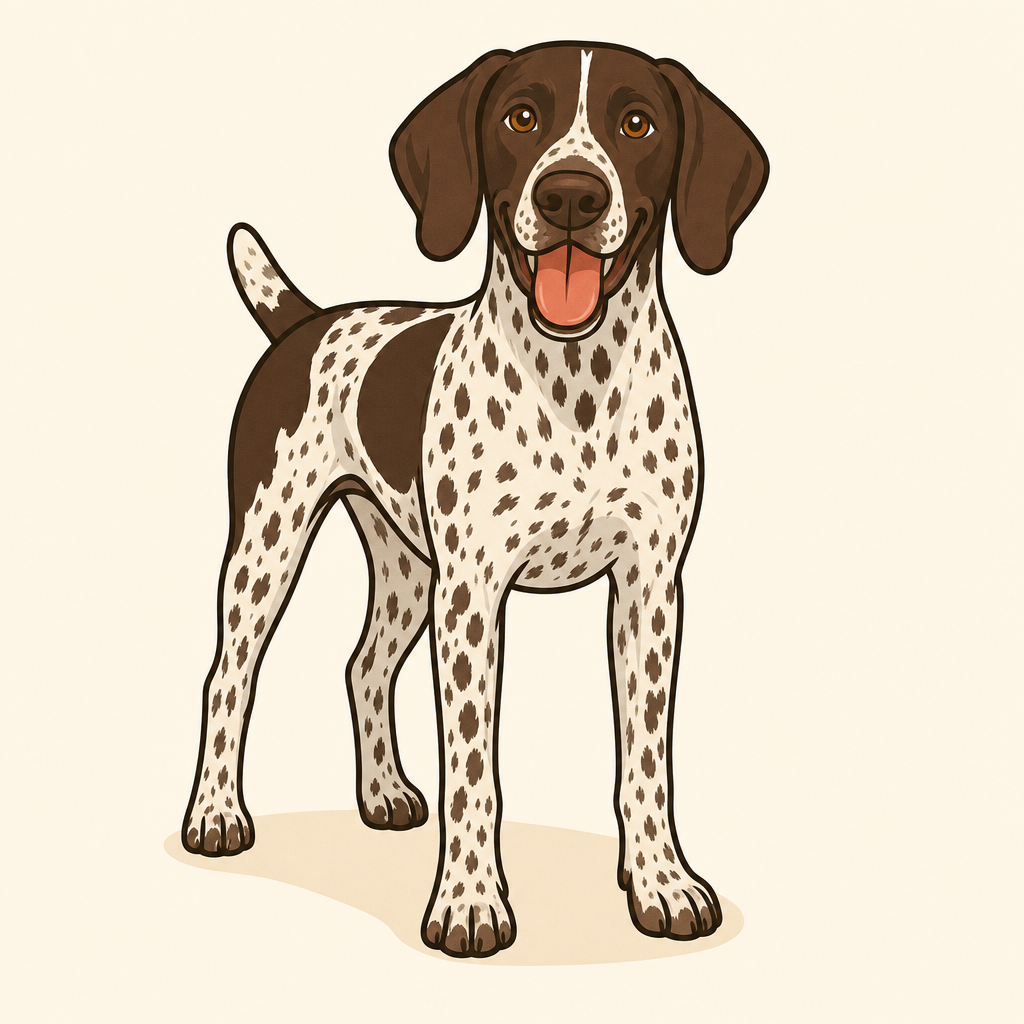
The German Shorthaired Pointer starter kit
Everything your future German Shorthaired Pointer (GSP) needs to move in, annex the couch, and immediately run the household — hand-assembled by DOGSCIENCE™ for a large chaos unit.
The German Shorthaired Pointer is what happens when you cross an Olympic athlete with a golden retriever's eternal optimism and then pump the entire thing full of espresso. These medium-to-large dynamos were bred to hunt all day in German forests, which means they have approximately seventeen thousand RPMs of built-in energy and a work ethic that makes your 9-to-5 look like a nap schedule. They are beautiful, athletic, eager to please, and will absolutely lose their minds if you don't give them a job.
GSPs love their people with a manic intensity that borders on stalking. They want to be WITH you, preferably while running at full speed toward something. They're smart enough to learn anything, stubborn enough to argue about it, and have a prey drive that means squirrels should file restraining orders. If you're looking for a couch potato, this is not your dog. If you're looking for a loyal, athletic partner who will sprint through hell and back for you, congratulations—you've found your soulmate.
Real talk: this breed needs experienced handling, consistent exercise, and actual purpose. They're not aggressive but they ARE intense. They will love your second dog unconditionally. Whether that's a good idea depends on whether you can handle the chaos multiplied.




Keeping a German Shorthaired Pointer alive, thriving & mildly unhinged
GSPs are not dogs you can half-ass. They need serious, intentional ownership. But if you're up for the commitment, they'll be the most rewarding chaos machine you've ever owned.
- Exercise is non-negotiable: These dogs need 1.5-2+ hours of hard exercise DAILY—running, swimming, fetching, field work. A walk around the block is an insult to their entire existence. Bored GSPs become destructive, anxious, and will eat your couch like it owes them money.
- Their coat is low-maintenance but sheds like it's getting paid: Short, sleek, water-resistant coat that needs brushing 2-3x per week during shedding season (which is always). They're not hypoallergenic. Your house will have dog hair in places you didn't know existed.
- Training requires consistency and early socialization: They're smart and biddable but have independent streaks. Start young, use positive reinforcement, be patient, and for god's sake, teach them a solid recall before they see a rabbit.
- They have a genuine prey drive: Cats, squirrels, small animals—GSPs will chase them. Not out of aggression, but because their brain is literally wired to point and retrieve. Management and training matter enormously.
- Health screening is essential: Hip and elbow dysplasia, von Willebrand's disease, and ear infections (floppy ears + water love = trouble) are real concerns. Get your pup from a reputable breeder who health-tests parents.
- Give them a job: This breed was literally designed to work. Hunting, agility, dock diving, service work—something. Without purpose, they invent their own (usually destructive).
German Shorthaired Pointer questions you're definitely Googling at 2am
Will my GSP get along with my other dog?
Almost certainly yes. GSPs are pack animals and generally love other dogs with embarrassing enthusiasm. They play hard, respect hierarchy, and rarely have aggression issues toward canine siblings. The bigger problem is that two GSPs together is TWICE the energy explosion and twice the demand for your time and exercise commitment. Your house will become a high-speed chase simulator. But as a duo? They'll entertain each other beautifully while demolishing everything you own. Best chaos multipliers in the business.
Can a first-time dog owner handle a GSP?
Maybe, but probably not ideally. These dogs need someone who understands exercise demands, can establish clear boundaries without being heavy-handed, and won't fall apart when training hits a plateau. They're not aggressive or difficult in the traditional sense, but they're relentless, independent-minded, and will expose every weakness in your consistency. If you're athletic, have time, are genuinely committed to training, and won't freak out when your dog decides to test you—go for it. If you're hoping for a more forgiving breed, honestly reconsider.
Why does my GSP want to eat literally everything?
Because they're hunting dogs and their mouths are how they explore the world. They're scent-driven and prey-driven, so anything that moves, smells like prey, or looks vaguely chewable is fair game. GSPs are notorious for counter-surfing, stealing food, and eating random objects. Manage their environment relentlessly—close doors, supervise, use crates, don't leave toys with small parts lying around. And yes, definitely use a vet who can handle GI emergencies, because some of them will absolutely eat something they shouldn't.
What if I can't meet the exercise demands?
Then you don't want a GSP. This isn't a moral judgment—it's a practical one. A chronically under-exercised GSP becomes anxious, destructive, and unhappy. There are hundreds of amazing dog breeds with lower drive. Do yourself and the dog a favor and pick one of those instead. A tired GSP is a happy, well-behaved GSP. A bored GSP is a disaster.
