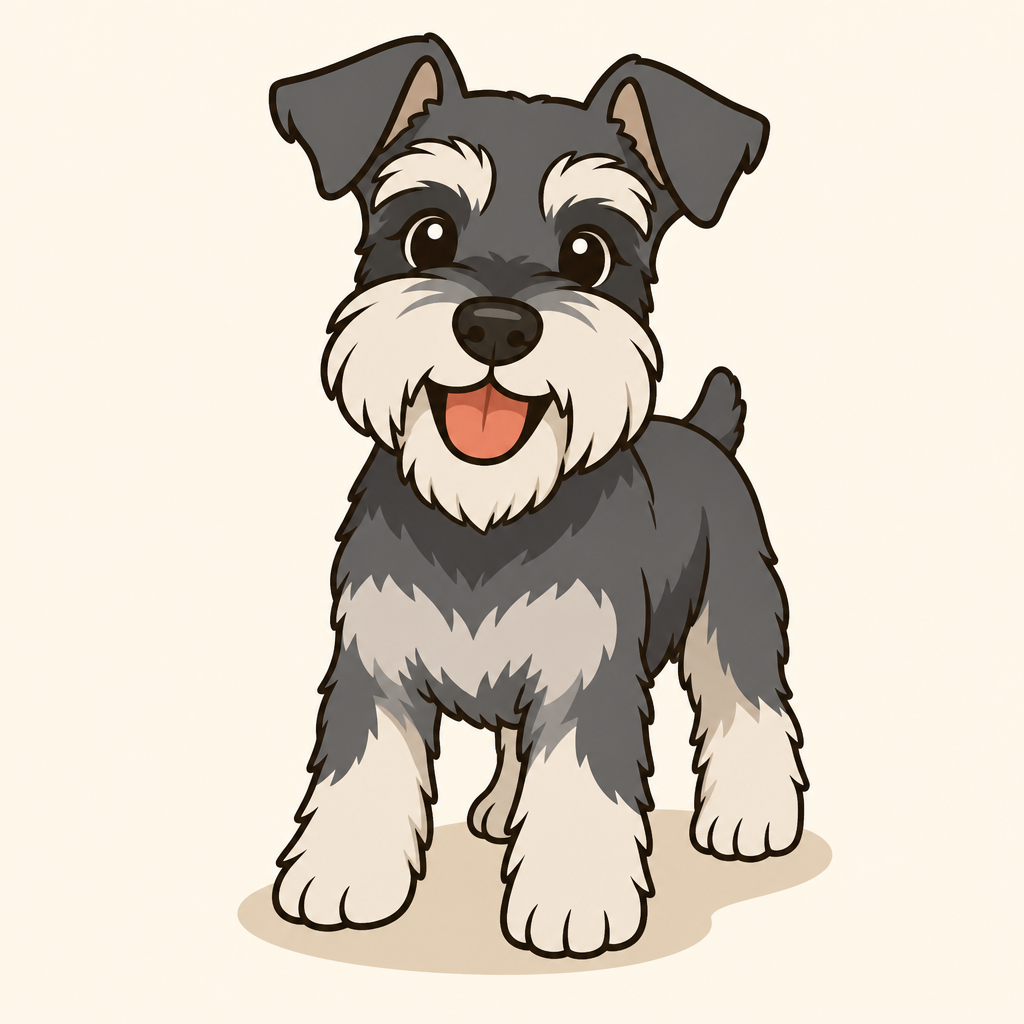
The Miniature Schnauzer starter kit
Everything your future Miniature Schnauzer (Mini Schnauzer) needs to move in, annex the couch, and immediately run the household — hand-assembled by DOGSCIENCE™ for a small chaos unit.
The Miniature Schnauzer is a 11-20 lb bundle of pure unfiltered attitude wrapped in a wiry salt-and-pepper coat. These are not lap dogs. These are tiny, mustachioed executives who have decided they own your house, your schedule, and your soul. They were originally bred to hunt rats in German farms, and they still carry that feral energy—except now they're hunting your socks, your dignity, and that one spot on the couch you specifically said no to.
They're smart. Aggressively smart. Like, they will manipulate you smart. They bark at everything (mailman, leaf, their own reflection, the concept of Tuesday). They're prone to Small Dog Syndrome if you let them—and trust me, they will LET you let them. But if you can channel that Napoleon complex into training, you get a loyal, scrappy, hilarious little gremlin who thinks they're a 150-lb German Shepherd. Not for couch potatoes or people who value peace and quiet. Perfect for people who think chaos is a personality trait.
Also: they require professional grooming every 6-8 weeks or they will look like a tiny, angry Rasta musician. Plan accordingly.


Keeping a Miniature Schnauzer alive, thriving & mildly unhinged
Miniature Schnauzers are high-maintenance in ways that aren't immediately obvious. Yes, they're small. No, that does not mean low-effort. Their wiry coat doesn't shed much, but it DOES mat if you ignore it, and it needs hand-stripping or clipping every couple months—not a suggestion, a requirement. Their ears are floppy and prone to infections. They have a stubborn streak that makes housebreaking feel like negotiating with a tiny, furry terrorist. And they have opinions about everything.
- Grooming is non-negotiable: Every 6-8 weeks, get them professionally groomed. Their coat tangles, they get matted, and home grooming is a whole thing. Budget $60-100 per session. This is not optional.
- Exercise them or they will express themselves via chaos: 30-45 minutes daily of real exercise (not just pottering around). They have terrier energy compressed into a tiny body. A bored Schnauzer is a destructive, barking nightmare.
- Clean those ears weekly: Floppy ears + wiry coat = ear infections. Grab a vet-approved ear cleaner and make it part of your routine. Seriously.
- Dental care is real: Small dogs have crowded teeth and are prone to gum disease. Brush their teeth 3-4 times a week minimum. Dental disease is not cute.
- Train them like you mean it: They are small enough to pick up and ignore training, which is exactly how you get a nightmare. Use positive reinforcement, be consistent, and do not let them think they won. They will run your life if given the chance.
- Watch for hypoglycemia and pancreatitis: Small breeds are prone to both. Don't overfeed, stick to quality food, and know the symptoms (lethargy, seizures, vomiting). Vet conversation material.
Miniature Schnauzer questions you're definitely Googling at 2am
Do they actually bark as much as people say?
Yes. Not exaggeration. They bark at sounds you cannot hear. They bark to inform you that they have decided it is time for dinner (even if you fed them an hour ago). They bark because the neighbor's dog looked at them weird in 2019. They bark at the concept of silence. Bark training is not optional—it's survival. They can learn to regulate it with consistent training, but the desire to bark is in their DNA. Accept this or do not get a Schnauzer.
Are they good with kids and other pets?
They can be, yes—with proper socialization from puppyhood. They're small enough that rough play can injure them, so they're better with kids 6+. They were bred to hunt small animals, so cats/rabbits/hamsters are honestly a gamble. Other dogs are usually fine, but Schnauzers don't read the room—they will absolutely start a fight with a 70-lb Golden Retriever and be shocked when they lose. Supervise everything.
What health issues should I actually worry about?
Miniature Schnauzers are prone to pancreatitis (often diet-related—keep fat intake moderate), bladder stones, eye problems (cataracts, progressive retinal atrophy), hyperlipidemia (high fat in the blood), and myotonia congenita (muscle stiffness, rare but genetic). Get a puppy from health-tested parents. Vet checkups aren't luxuries—they're mandatory.
Can I just give them a home haircut and save money?
You can try. Most people regret it. Their coat is wiry and specific—hand-stripping is an art form. If you clip them with clippers, the coat texture changes and gets softer and mattier. You'll save $80 once and spend $500 fixing it later. Professional grooming is a recurring cost. Budget it like you budget for food. It's not optional.
